

When it comes to documenting non-heteronormative individuals, several names come to mind. For instance, photographers such as Sunil Gupta, Robert Mapplethorpe, Ren Hang, Nan Goldin, Dyanita Singh, and George Platt Lynes have often been at the forefront. However, while one often thanks them, we quietly overlook one individual who documented queer intimacy even before the word itself was recognized by society: Alice Austen. Here is a look at the life of the stalwart who radically challenged Victorian ideas of gender, propriety, and visibility.
Alice Austen was a photographer who lived at her family home, Clear Comfort, in Staten Island, New York. She was financially independent for much of her early life, and she never married a man. Austen was one of the who had a rare position at that time; she lived without male supervision. Instead, she lived with Gertrude Tate, her long-time romantic partner, and their relationship lasted over 50 years. The photographer never really labelled their relationship, since the word ‘queer’ did not exist in the modern sense. However, it was this liberation that helped Austen to document female friendship, intimacy, and autonomy, and heteronormative resistance.
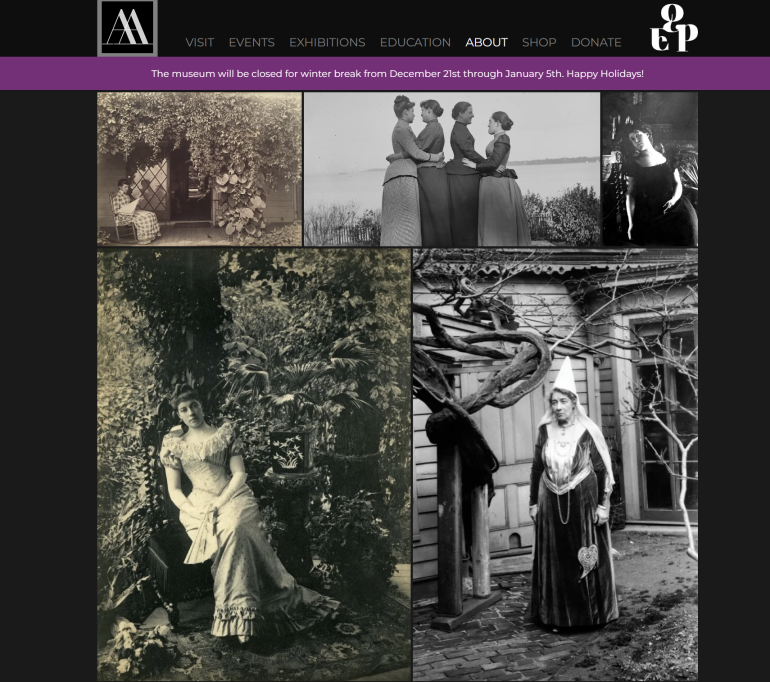
What makes Alice Austen stand out the most is not who she was but how she managed to photograph lesbian intimacy. In a series of photographs taken in 1890, the photographer documented her friends in men’s clothing, smoking, engaging in mock fighting, or striking confident poses. The images are humorous, but they are also subversive. In a way, Austen showcases how gender is not fixed or natural but rather, it can be worn, exaggerated, and even discarded. If seen through a contemporary lens, one can even describe her work as gender performativity. The women did not want to pass as men; rather, they wanted to expose how masculinity is a costume itself.
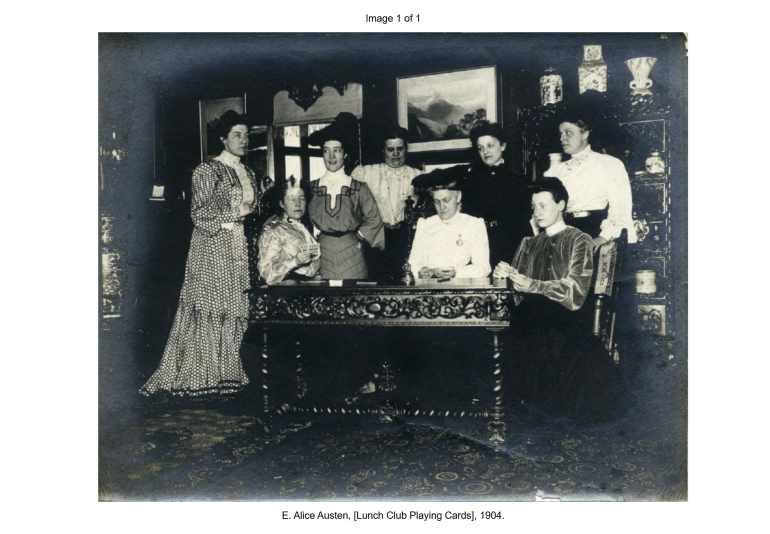
In her 1975 essay, Visual Pleasure and Narrative Cinema, Laura Mulvey argued that our visual culture conforms to the male gaze. In other words, women are objects in most films and other visual media and function as the objects of heterosexual male desire rather than as active subjects. But while Mulvey wrote about cinema during the peak period of feminism, her essay also helps us to understand Alice Austin’s images.
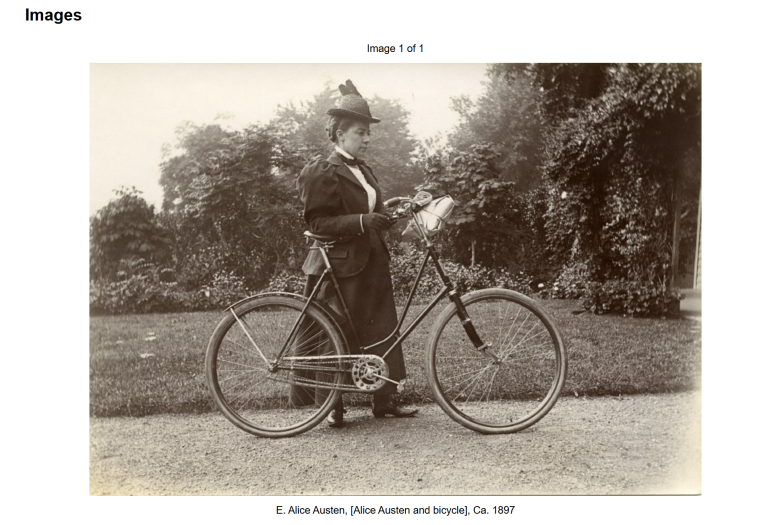
Victorian-era photographers were often created by women, intended for a private audience, and were often expected to cater to male viewership. Thus, they deliberately refuse the male gaze. They are not posing to be looked at. Rather, they look at one another and exist in their own social world. Mulvey called this a destruction of pleasure as spectacle. The images are for voyeuristic use. But the images function as a domestic archive. As Nicole Hudgins argues in her book, The Gender of Photography, Austen’s images are radical because they are photographed in ordinary places. As the scholar puts it, the photographer is staging her acts of rebellion. The everydayness of the shared intimacy, closeness, and joy is what makes the work so powerful. It also showcases that queer life did not emerge suddenly in the 20th century—it was always there, quietly lived and privately recorded. In addition, the photographer’s work also challenges the narrative that queerness must be tragic. It was private but also sustainable, with long-term relationships enjoyed in secrecy.
In fact, the tone of the image is what sets them apart. Her images are not medicalized, moralizing, or punishing. In fact, she showcases queer pleasures with ease and belonging, and further helps with what many theorists call counter-visuality. The images resist the dominant ways of seeing. However, despite her contribution, the photographer died in poverty. Moreover, for decades, her archive was dismissed by a patriarchal art world. It is only in more recent decades that she has been rediscovered and found her way back into history books as a crucial figure in the history of queer seeing.