

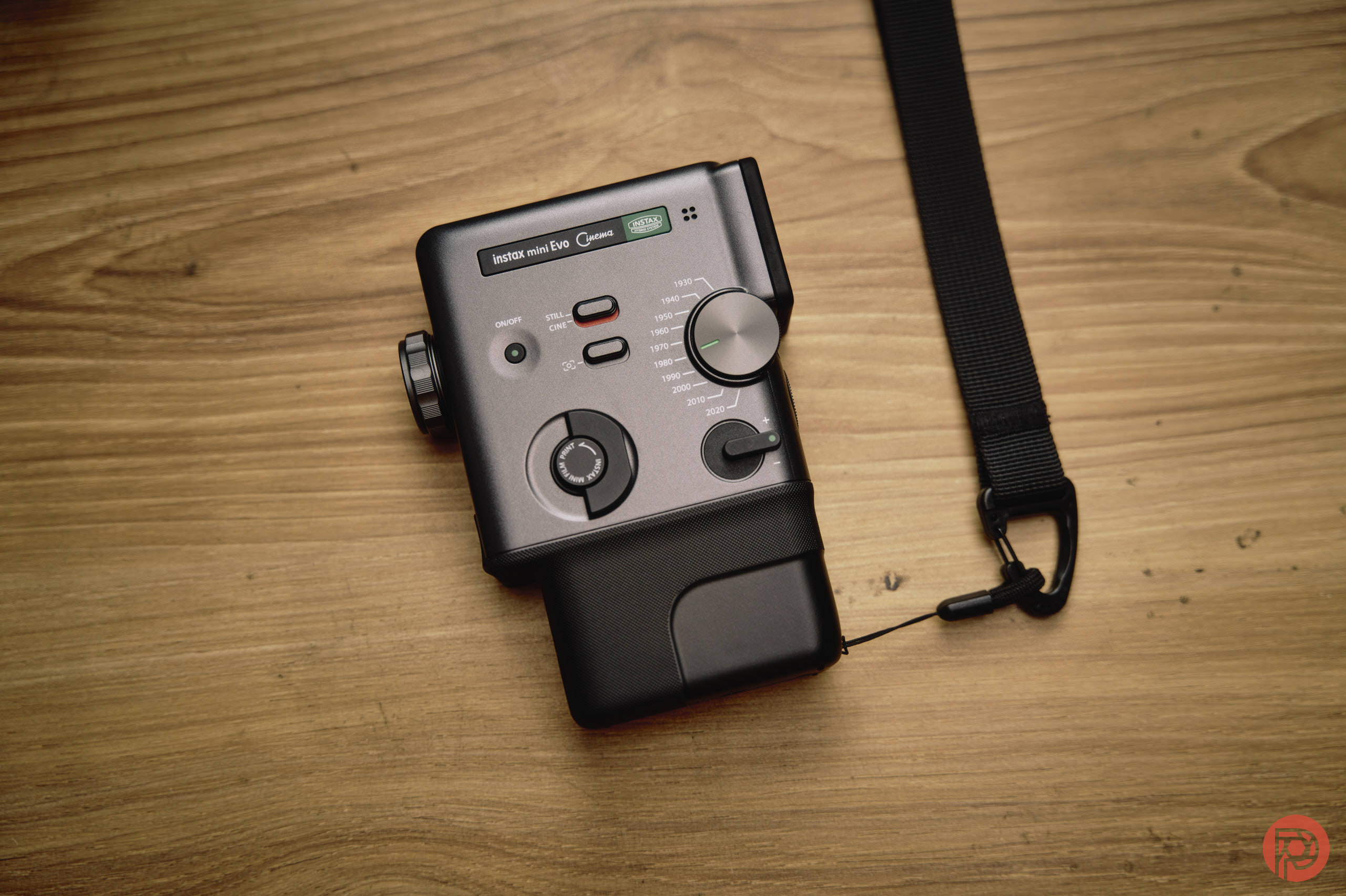
Many of Fujifilm’s cameras in the past few years have been incredibly frustrating to me. The brand that sold photographers the idea that their X Trans sensors could perform on the same level as full-frame sensors quickly pivoted within a few years to making their own medium format cameras. Then, they seemingly dismissed their fan-base by catering more to the content creator than the photographer. It’s one thing to try new experiences as you evolve as a brand — but it’s another to abandon your customer base. Fuji hasn’t really done that — but they surely feel like that friend who only reaches out to you when they need something instead of offering up symbiosis. And in many ways, I feel like the Fujifilm Instax Mini Evo Cinema is a culmination of that.
I made the conscious decision years ago that the Phoblographer would stop covering video products because I saw this whole crazy content creation calamity coming from miles away. I first-hand experienced what it did to my fellow millennials and it was clearly visible to me what it did to even those older and younger than me. And so I have joined so many others to be a recovering dopamine-casino addict. The rare exception is the Camp Snap 8 that we covered a little while back and a Panasonic camcorder that I thought showed promise.
There’s a big and important word there: camcorder.
Before I got into stills, I was a video shooter. But stills paid the bills, so to speak, when I got out of college. I loved and adored both camcorders and cinema-cameras. And really, I could never fully embrace the idea of shooting everything on just my Canon 5D Mk II. Sony’s a7r III made it a whole lot better in balancing stills in video, but since then, lots of cameras have been kind of these monstrosities that I sort of wish never came out.
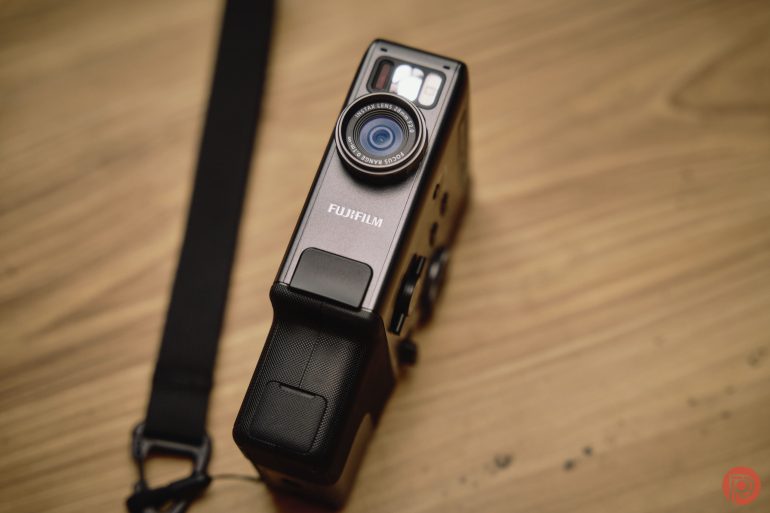
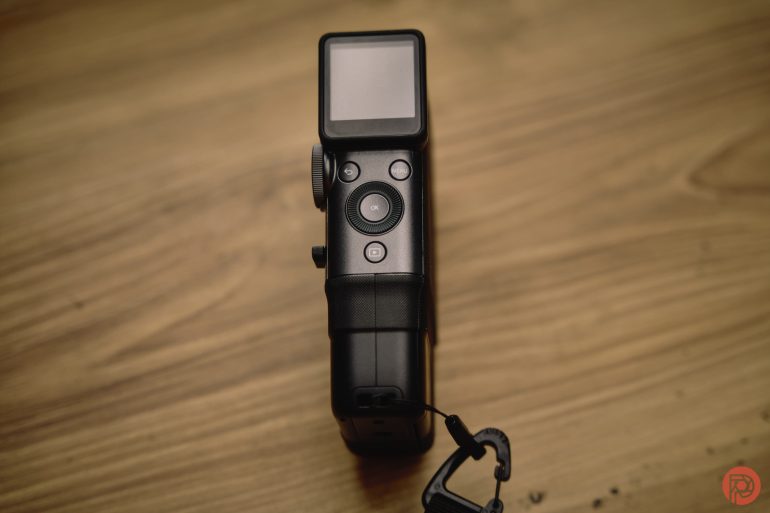
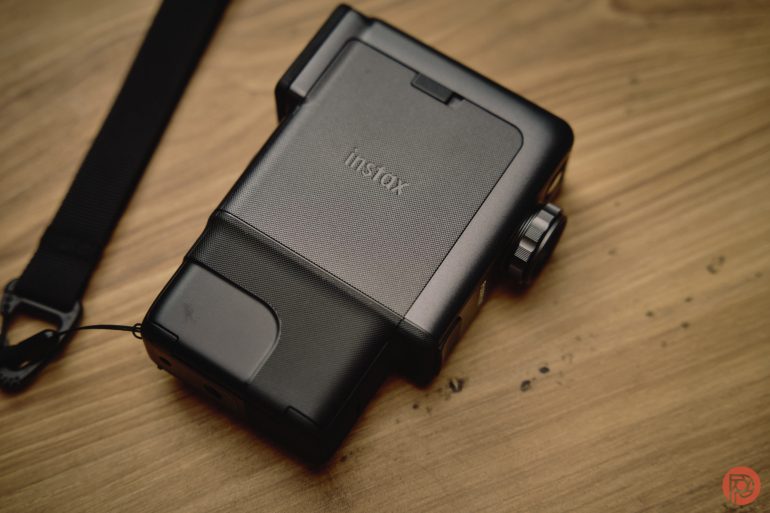
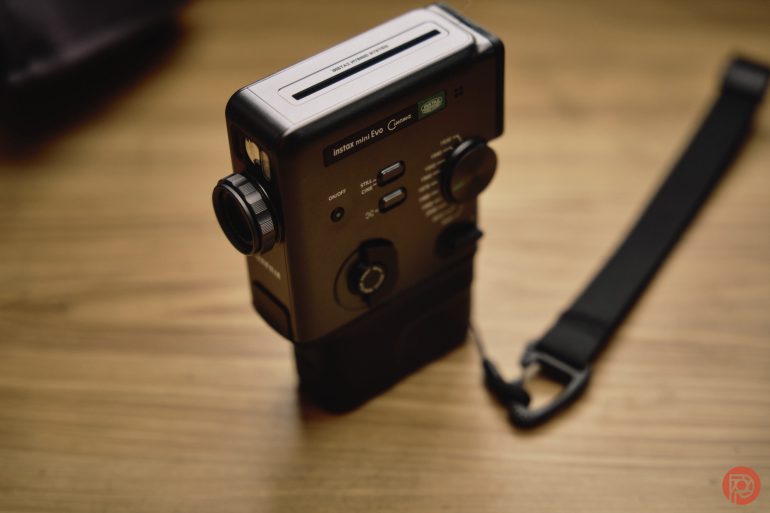
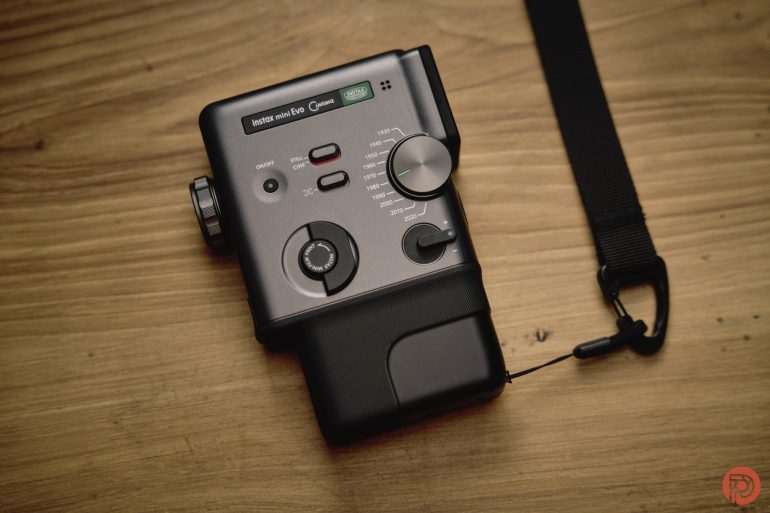
So when Fujifilm announced the new Fujifilm Instax Mini Evo Cinema, I was really beside myself. Finally, to me, it seemed as though the company had woken up and started to explore the marketing potential of something like this. Ultimately, I would have wanted a Bolex-style camera that used Fujifilm’s X-mount. But this is pretty cool. It reminds me of some of Canon’s earlier point-and-shoots from the mid-2000s era.
What’s really awesome about the Fujifilm Instax Mini Evo Cinema is what it does so much differently. It’s a cinema-first camera designed to also shoot stills and print Instax photos. Additionally, there’s a dedicated switch that allows you to change the way vertical-only video is rendered. It can go from the 1930s all the way until the modern era. As you switch from one look to the other, the Fujifilm Instax Mini Evo Cinema will take a while to boot up the new look. Sometimes, it’s painfully slow to the point of my not even wanting to use the camera at times.
Everyone around me gets curious about it when I use it. And I often ended up printing Instax mini photos for those folks. However, when things needed to become more serious, I ended up feeling flat-out disappointed.
First off, the battery life is pretty bad. When shooting with the camera, it suddenly felt like I was using one of Sony’s first full-frame mirrorless cameras. But this time around, you can’t swap the battery out of the seven others you may have purchased.
The resolution of the images and video shot is pretty low — and I can sort of expect that. But I also know just how good scanned film can look.
Fujifilm gave me access to a beta version of their Instax Mini Evo app for iOS. And upon connecting my camera to that app via my iPhone, I was able to get the images off the camera wirelessly. However, their app doesn’t make it easy to share those images into my Photos library. Instead, it will only do it with the images I’ve printed thus far.
So far, this all sounds like pre-production issues. But the biggest problem happened when I tried to get even more direct. I hooked the camera up to my iMac via USB-C, and it wouldn’t boot up as a discoverable drive. I even tried using the Image Capture program workaround — and no luck came my way. Keep in mind, this was even after I finally chose to use a Mini SD card — which created a whole host of other issues, too.
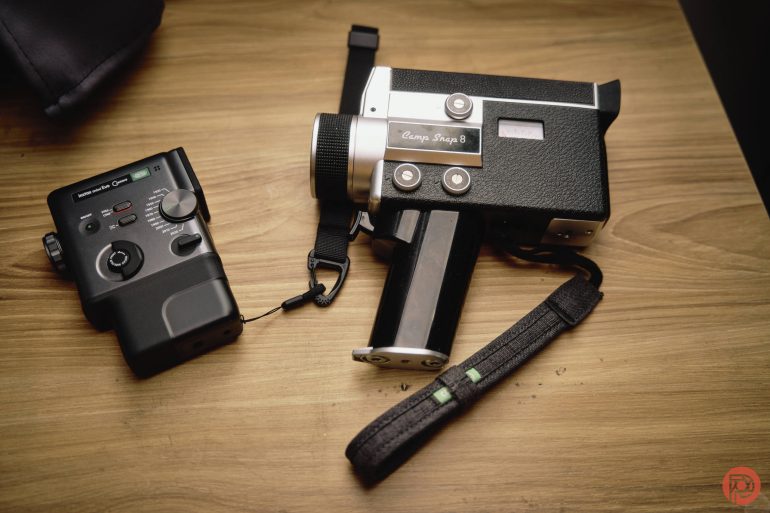
Eventually, I updated the firmware using the app. But upon rebooting the camera, it wouldn’t recognize the button input of any of the dials or buttons. So I had to end up letting the battery die, charging it back up, and then restarting the camera. After setting up the time and date, the buttons still wouldn’t work.
I’m inclined to blame these issues on this being a pre-production unit. But I can’t say that with certainty yet.
Journalists who’ve been working in this industry for years can typically blame issues like this on this being an early unit. But lots of Fujifilm’s Analog/Digital hybrid products suffer from issues around them being really cheap products. For years, I had nothing to compare this to — but now I do.
By and large, I’d choose a Camp Snap 8 over this camera any day of the week if I wanted to shoot video. Not only does it not lock me to a vertical format-only option, but it actually works because it keeps things much simpler. Instax and Fujifilm have way more resources than Camp Snap does. And I’m at a loss to understand why this feels like a truly enshitified experience.
I’ve never been so utterly and completely disappointed in an Instax product in my life. Don’t bother getting this.