

The early 20th century was a time of wonder. Photography has gradually taken root in the art world, and many creative minds have turned to it to document the world around them. One of them was German photographer August Sander, who decided to achieve something far more ambitious (and somewhat authoritarian): he wanted to photograph a whole country. Considered to be the most important creator of that time, his work continues to have a sway even today. But was his idea so novel that it requires a place even now?
What Was August Sander’s Work About?
Sander’s series, People of the 20th century, was a portrait project. However, when looked at closely, you can see typology, a study of human behavior. His catalogue included portraits of people in various categories: farmers, craftsmen, professionals, artists, the unemployed, and others. August Sander believed that one’s face, posture, and clothing can reveal one’s social identity. His camera was a taxonomical tool, which in many ways reiterates hierarchies.
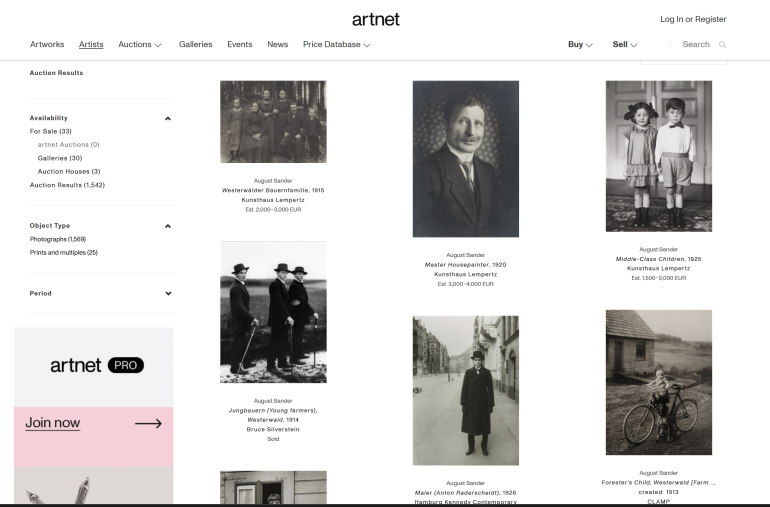
As Amelia Jones states in The Eternal Return: “Sander’s work reiterates photography’s archival and taxonomic impulse.” In other words, the archival logic he employed was more a matter of desire to map. classify and, in some ways, control the society. The portraits appear neutral on the surface, but the face, frame, and minimal manipulation often lead to the impulse to ensure society is categorized into a readable visual type. Jones further argues that his typologies aren’t mere documentation, but they are a construction of social truth. When one labels people as “bohemian” or “framer,” you further ensure that their place is solidified in a given category, and the change from that is inevitable.
With this series, one can also bring Michel Foucault’s theories of surveillance and discipline. The images in this series become a part of a visual power structure that the French historian spoke about. It is a system where bodies are measured and stirred, all the while a meaning being assigned to them. The camera is not only a mirror now but also a microscope, where individuals are boxed into broader groups.
Who did it Better?
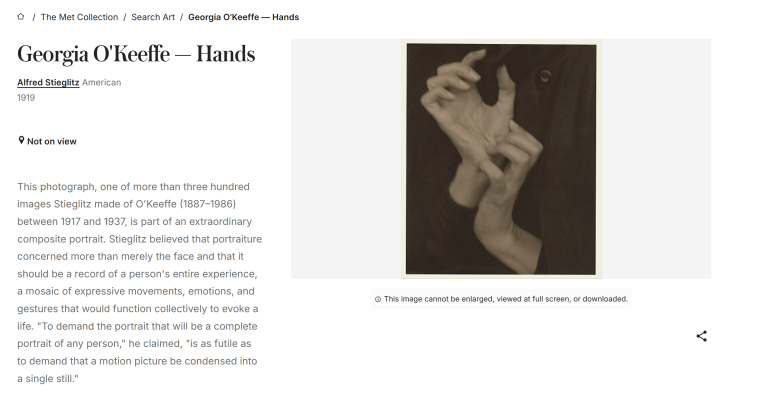
According to Amelia Jones, other American photographers, Edward Weston and Alfred Stieglitz, chose to resist the need for archival images. Their portraits and their abstract works began to challenge Sander’s claim that faces can be read like one reads data. These photographers focused on forms rather than social types. They worked with gestures. For instance, Steiglitz is known to capture images of his partner, Georgia O’Keeffe, and each portrait of her body parts, such as hands on legs or the abdomen, worked as a portrait of her as a person. As for Weston, his grand, textured photographs of landscapes also helped to push phtoography towards artistry.
In more recent times, photographers such as Gordon Parks, Zanele Muholi, and Sudharak Olwe have surpassed Sander’s in profound ways. Parks photographed Black American life with empathy and dignity, showcasing the challenges faced by the community during segregation. Muholi was forefronting queer black identity with his lens, and Olwe, an Indian photographer, exposed caste-based labour conditions, without reducing them to a category. Each of their works was political, ethical, and self-aware, a quality that Sander was unable to achieve.
This thus proves that one can’t define a society as they see it. That will not work. However, as modern photographers, we must remember that change comes from within. And that will continue to be better than just reinforcing stigma and stereotype.