


Modern cameras have incredible autofocusing abilities. In fact, they’re so smart that cameras like the LUMIX S5II can detect subjects like humans, animals, birds, cars, and more. As great as it is, there are still times when it makes more sense to be intentional about the photos that you’re shooting. In the same way that you’d want to set your exposure automatically, you can at times set your focusing intentionally too! And with certain LUTS attached to your images, you’d even want to set the white balance to get a look that you’re really dreaming about. Let’s explore when you’d want to really use manual focus over the really solid autofocus in modern cameras.
This article is presented in partnership with LUMIX.
Table of Contents
Street Photography: Focus Lock and Zone Focusing

When shooting street photography, we’ve proven already that cameras like the LUMIX S9 can find people on the streets pretty easily. But at other times, you truly want to use your cameras for a more meditative process. In Vipassana meditation, you can do something called the walking meditation. This is when you’re concentrating on what’s going on internally while moving. Otherwise, you can focus out to a certain distance away from you and keep walking while maintaining that focus. As a certified teacher, I can tell you for sure that this sounds a lot like something that street photographers use: zone focusing.
Zone focusing is when you focus your camera and lens out to a certain distance away. For safety and ease, let’s say five feet away. Then you concentrate on everything that’s specifically that distance away and keep said distance in focus as you walk. So no matter what, you’re always focusing out to five feet away.
When applying that to street photography, you also often need to stop the lens down to somewhere between f4 and f8. Thankfully, LUMIX has great lenses like the 50mm f1.8 LUMIX S and the 35mm f1.8 LUMIX S. Combined with a feature like focus lock, which lets you set the distance and then enables both the camera and lens to not switch that distance, you can effectively do zone focusing when shooting street photography.
This feature isn’t widely available from most camera manufacturers — especially not those who make full-frame cameras. Our advice: combine it with Real Time LUT files downloaded to your LUMIX S9, LUMIX S5II, or LUMIX S5IIX to get the most of the images and your intentionality.
Astrophotography: Live Composite
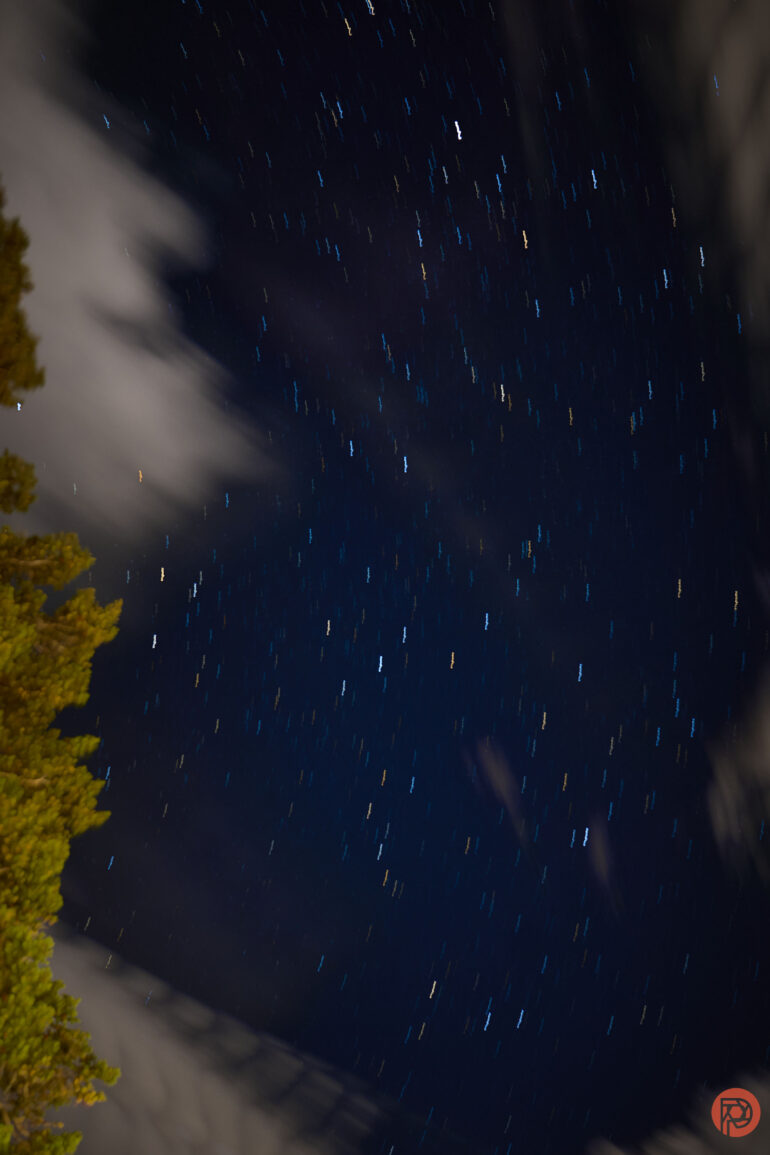
On the idea of creating images in-camera with little to no post-production, many LUMIX cameras have a setting called Live View Composite. It’s best used when trying to do astrophotography. Of course, since everything is so far away, you’ll need to get the stars in focus — literally. So, after your camera is set down on a tripod or stable surface, set the manual focus distance out to the max and ensure that both the lens and camera are set to manually focus. Then, set your exposure for the composite, and let the camera and lens make some digital magic happen.
Macro Photography: Bolstering with AF-Zone Scope
Macro photography is one of the times when photographers have traditionally been plagued with autofocus problems. But in the past few years, things have majorly improved. One of our favorite lenses to use is the LUMIX S 100mm f2.8 Macro. Not only is it insanely fast to achieve autofocus, but it also uses a superpower that LUMIX cameras have: AF-Zone Scope.
Most LUMIX camera users set their cameras to the AF-C mode and enjoy the phase detection benefits that it gives them. But when you use the AF-Zone scope mode, it quickly switches the camera to AF-S and then really ensures that it gets a very particular part of the frame in focus. Just to make sure that it’s perfect, it’ll take a little bit of time. However, it’s sometimes still faster than manually focusing the lens out by itself. Still, if you’re trying to be even more intentional about your work, you’ll want to do the meditative process of manually focusing just to do touchups on the work the camera and lens do.
The point overall is to use the camera as a meditation device to make the images you really want. And the fruits of your progress will be photos that are worthy of putting on your website for all to see.