


There was a time when we were able to imagine much more freely than we do today. If you saw a photograph in a magazine or a still from a film some decades ago, your brain would instantly begin to wander and wonder. How was that shot lit? What film did they use? How could I creatively come up with something like that? However, chances were that you couldn’t replicate it perfectly. But by chasing the feeling, you got inspired. You also ended up becoming more imaginative, not imitative. So do you have Aphantasia?
Why Did We Stop Looking For Inspiration
That was the beauty of the analog age. Creativity came with some limitations, but not limits. Those limitations pushed us to think, to change, and to imagine. Photographers were like alchemists (some of us still are). They worked with light, the ideas behind which came from inspiration, not algorithms. They failed more often than they succeeded. Yet, every frame had a story behind it because each shot was earned. Maybe we imitated at times, but we didn’t blindly ape someone.

Even in the early years of the home internet revolution, I would argue that creativity remained something you could and would chase. You’d explore sites like Flickr or DeviantArt, come across a photo that resonated with you, and want to learn how they did that. The main focus was “learn,” and I did that for many years myself. We weren’t trying to recreate pixels; we were trying to master techniques like light direction, color tone, and shadow play. We would then try turning that knowledge into something personal and develop a signature style of our own. Back then, imitation served as a form of education. Perhaps some of us began by trying to copy, but eventually, we developed our own style. This was inevitable. Your surroundings, limitations, and personal taste will all influence your work. Today, that evolution has stalled. Social media algorithms favor repetition over growth. Where’s the imagination?
You’re not improving your art by copying trends; you’re just teaching the system to value and reward mediocrity.
The Algorithm Ate Our Imagination
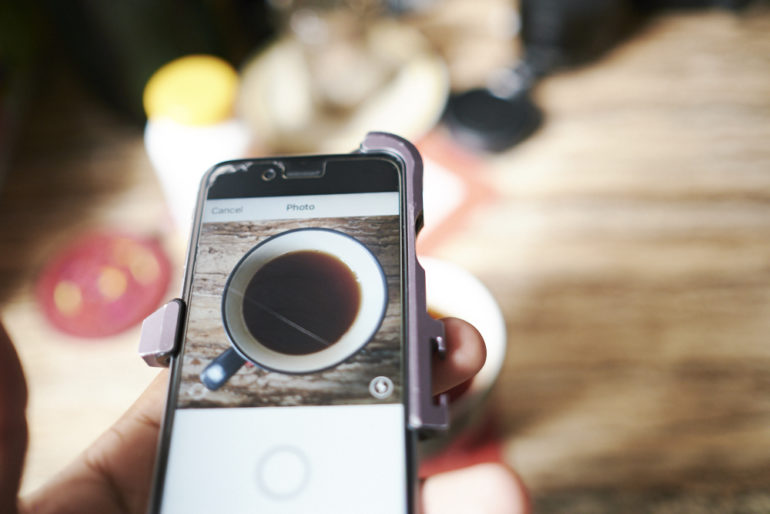
There’s a condition called aphantasia, where people lose the ability to create mental imagery. They can’t visualize objects in their mind anymore. What if we’re collectively heading there, not biologically but culturally? Social media is turning us into photographers who can’t imagine beyond the references that we keep seeing on our phones. We don’t create anymore. We chase. Scroll through Instagram or TikTok and you’ll see the same ‘viral’ compositions on repeat. The same sunset tones, the same desaturated skin, the same slow pan on someone walking through fog. It looks beautiful, but none of it looks different. We’re no longer making good photos. Instead, we’re feeding an algorithm and starving our own creativity as a result.
But what’s absolutely unnecessary is that we’re feeding a machine that doesn’t care about art, emotion, or effort. All for the sake of billionaires (and one soon-to-be trillionaire) to exercise control and influence over the planet like never before. Every like, every share, every short-form imitation keeps this vicious garbage truck churning out more such content. We think we’re creating to inspire, but what we’re really doing is training the machine to recognize patterns and reward sameness. What good is it when we become eventual soulless online clones? You’re not improving your art by copying trends; you’re just teaching the system to value and reward mediocrity.
It’s Called Doomscrolling For A Reason
When scrolling through hundreds of images and videos every day, we think we’re learning something that benefits us. But truthfully, our brains aren’t absorbing technique or emotion this way; they’re just cataloging patterns. We’re evolving into passive receivers when we should be active visionaries. If you think it’s something harmless, then the system has won already. The way in which we think and remember is being rewired by this relentless tsunami of content. Haven’t you walked into a room recently and forgotten why you entered it? Opened up an app and totally went blank about what you wanted to do with it? Lost track of what day it is sometimes? That’s all the result of this new doomscrolling behavior that has become ingrained in your daily life. But there’s something deeper happening too, the erosion of mental imagery itself.
Visualization seems to be slowly phasing itself out; now we merely reference things subconsiously. When you imagine something these days, do you truly see it in your mind, or are you just recalling an image or trending video you once scrolled past on your phone? Answer truthfully. On the surface might seem like a subtle contrast, but it’s really the difference between inspired creation and aped imitation. You could even say it’s what separates art and content in today’s world.

This is something that’s stopping our growth as photographers. We’re no longer imagining what else could be if we’re only looking to replicate what’s already being applauded on social media. The issue isn’t just with us photographers. Even those who used to look up to us and our content on their feeds, are spending more time on the “Explore” and “Discover” sections of their apps, consuming content from creators they don’t follow more than from those they do. How tragic it is that so many of us don’t even notice it happening. Remember that your creative burnout doesn’t happen in one day. It’s a slow and invisible erosion of your artistry.
We’re evolving into passive receivers when we should be active visionaries.
Get Off Your Screens. Reclaim Your Imagination

Look away from the devices that killed imagination, if you really want to rediscover it. It honestly can’t be found in endless social feeds or viral hashtags. Search for it in real-world experiences that awaken your senses. Head to a photography gallery. Find a large print, even one of your own, and examine it carefully with your eyes, studying it closely. Pick up a photography book and mentally observe the artist’s thought process and evolution. Heck, go see a movie in a cinema, but make sure your phone isn’t looked at for the entirety of the film’s duration. These are spaces where imagination still lives – in print, in projection, in tangible goods that we once knew we could easily be inspired by. You can’t scroll past or swipe away; you just see and absorb like once before.

I experienced this firsthand on a trip to Oman about two decades ago. Sure, the internet wasn’t as accessible then as it is now, but we got holed up in a hotel with no TV or internet for a handful of days. It was a time when there was no roaming data either. That trip forced me to disconnect and think creatively whenever I composed a frame of my surroundings. And when you disconnect this way, your mind has room to breathe again. Because your brain isn’t flooded with everyone else’s images that some servers think you should mimic.
Look away from the devices that killed imagination, if you really want to rediscover it. It honestly can’t be found in endless social feeds or viral hashtags.
Make The Change Before It Gets Too Late
With AI already hitting our timelines with near-perfect fake imagery, it’ll soon be hard to tell what’s real. We won’t be making art anymore then. Feed your imagination the right way again. Step away from your screens and look for inspiration around you. In faces, light, textures, and emotions that exist outside of pixels. Think more slowly and let your curiosity breathe. Photographers of the analog age didn’t have the luxury of endless reference material. Maybe that’s why we were more imaginative back then. We weren’t drowning in images; just chasing ideas. It’s time we do the same without delay. The world doesn’t need another viral reel. It needs photographers who can see again — not with their phones, but with their minds.