

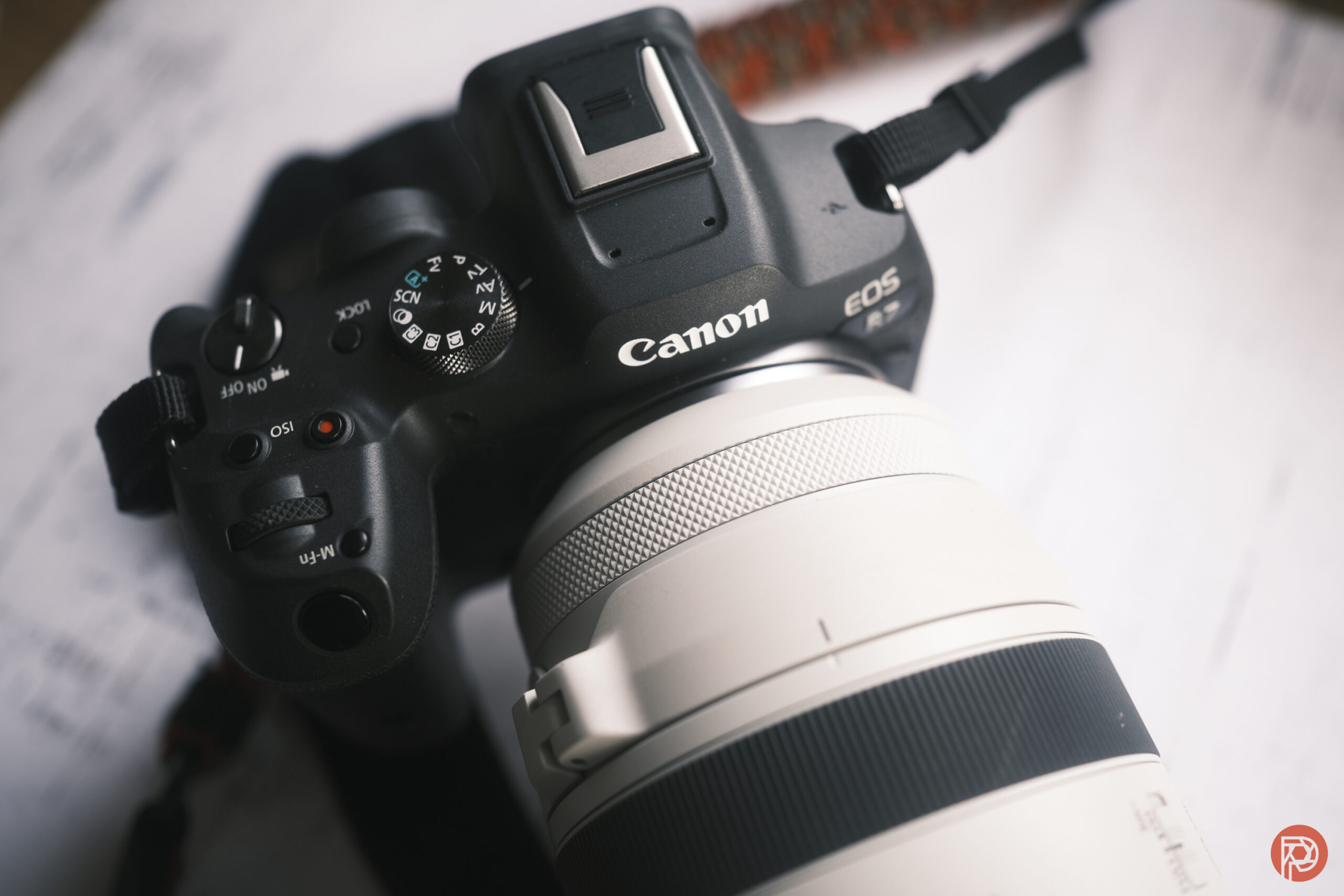
Canon’s announcements have been limited this year. The company is focused on improving flagships such as the R1 and the R5 II, which means photographers will have to wait to see a new device. However, that wait is not too long. According to new reports, Canon is likely to target the first half of next year. It also appears that we may get a completely new sensor this time.
What is Canon Working On?
According to Canon Rumors, the company is likely to introduce the successors to the R7 around February. The CP+ Show in Yokohama, Japan, is the new Photokina, and last year, they announced the PowerShot V1 during this event. With CP+ becoming the new Photokina, it is possible that companies are keen on introducing their devices around this period.
However, the most interesting part about the news is not just the launch date, but the sensor itself. The report notes that Canon is likely to create a 40MP APS-C camera, which can also record 8K/60P videos. With the R7 currently featuring a 32MP sensor, a 40MP option seems plausible, yet also something to capture the attention of audiences. However, this is also an opportunity for Canon to introduce its first BSI and/or stacked APS-C image sensor.
If this proves to be true, then it is safe to say that we won’t see a new APS-C flagship for another few years. While the full-frame models have the R6 III, the company can introduce more options for other models, such as the R5 and the R1 series. In fact, if Canon decides to take the R7 II seriously, they can also compete with Fujifilm, which currently features a 40MP BSI sensor in the X-T5 and the X-H2, among other models.
Why Does The Sensor Matter?
The BSI has a few benefits. For instance, it can gather better light per pixel, have cleaner ISO, and better dynamic range, each of which can help design an all-around APS-C camera.
As for stacked, you get benefits such as faster readout speeds, better control over rolling shutter, and blackout-free EVF when shooting at higher burst rates. There is also snappier AF and options for video modes. However, with a sensor of this nature, you also need better heat distribution, especially for those who record videos.
What Else Should We Get?
Fujifilm is already at the top of its game, and Sony‘s a6xxx series is no slouch. Canon, as a result, has to work really hard to surpass the two. The R7 II will need to improve its autofocus, allowing for the detection of birds, vehicles, people, and also smatter tracking, as well as pre-burst capture. There must be in-built image stabilization, which will help wildlife photographers when they work with telephoto lenses. A faster burst rate is another reason. Ideally, we are looking at 30fps or 40fps. Better ergonomics, such as higher resolution EVF, along with faster refresh rates.
But the camera alone is not going to do heavy lifting. The RF-S lineup needs better lenses to support such a camera. The RF-S is still a slower-growing lineup, which suggests that Canon is not taking the smaller sensor market too seriously. With Sigma and Tamron now entering the market, photographers may have the opportunity to work with a larger portfolio.
Either way, it remains to be seen what Canon has in store. We do hope it is a whole package.