

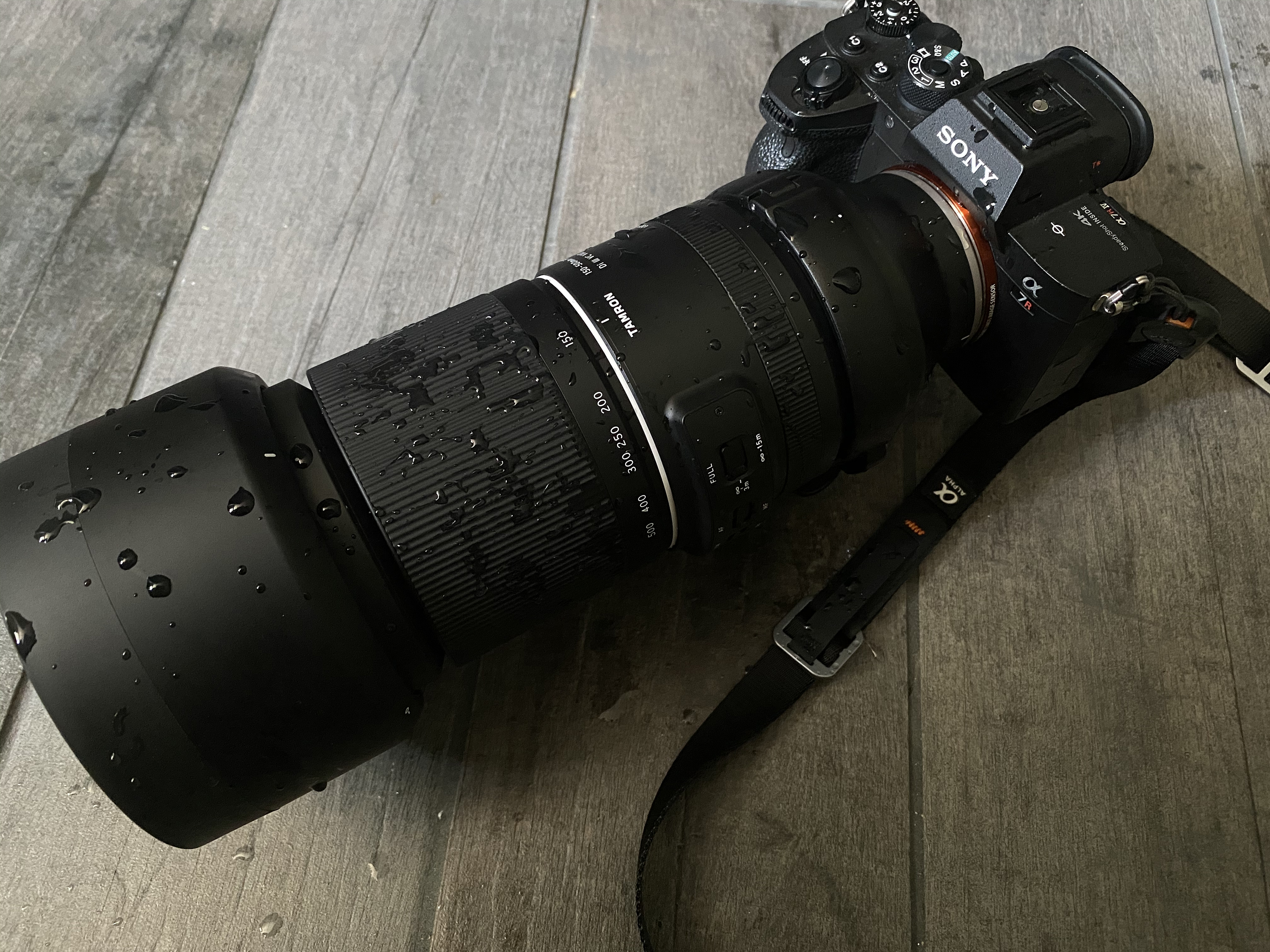
When it comes to the Tamron 150-500mm f5.3-6.7 Di III VC VXD, aside from being a mouthful to get out (Tamron 150-500mm VC VXD from here on out), it is easily one of the best super-telephoto zoom lenses you can buy for Sony FE-mount cameras. Recently, Tamron released a firmware update for the lens that improves autofocusing and adds compatibility with Sony’s a9 III’s 120 frame-per-second burst mode. Is it time to update your camera’s firmware? Yes, it is.
Tamron 150-500 VC VXD Firmware Version 4

The following description comes directly from Tamron’s firmware update notes:
- Improved AF Performance during zooming
- With a9III, when its focus mode is set to AF-S, DMF, or MF, the lens will support continuous shooting up to approximately 120 frames per second
- Improved AF assist function
The standout feature for Sony a9III owners is the lens’s ability to continuously shoot at up to 120 frames per second. Now, the truth is that no one will need to shoot at 120 frames per second, but if you have the added ability to do so, it’s good to know that you can push it if necessary. While the 120 frames per second update will most likely benefit wildlife photographers – birding in specific – there is potential for action/motor sport photographers as well.
Real-World Autofocusing Experience
We recently tested the Tamron 150-500 VC VXD paired with the Sony a9III, both running the latest firmware. Once again, we took the 150-500mm VC VXD out birding and found that the lens’s autofocusing was solid; however, our loaner unit did seem to have an issue focusing at infinity. After some additional testing, it’s likely that there might have been an issue with the loaner, as it did not seem to accurately keep focus at infinity across the zoom range, nor did it matter which autofocusing mode (including MF) the a9III was set to.
At this time of year, the New York City area is home to various seabirds and Canadian geese that seem to take over Jamaica Bay. One of the features of the Sony a9III is its ability to shoot 120fps without blackout, and now, the Tamron 150-500mm is fully compatible with this feature. In our testing, we were able to track and capture birds of various sizes in flight and fire off multiple frames without experiencing blackout or lens stutter. A higher shutter speed is absolutely necessary to minimize shake, especially at the 500mm end of the focal range. While 120 frames per second may feel excessive, it’s very possible with the 150-500 XC VXD.
Below are some sample images taken from that birding expedition; these images were edited:


Keeping the Lens Current and Relevant
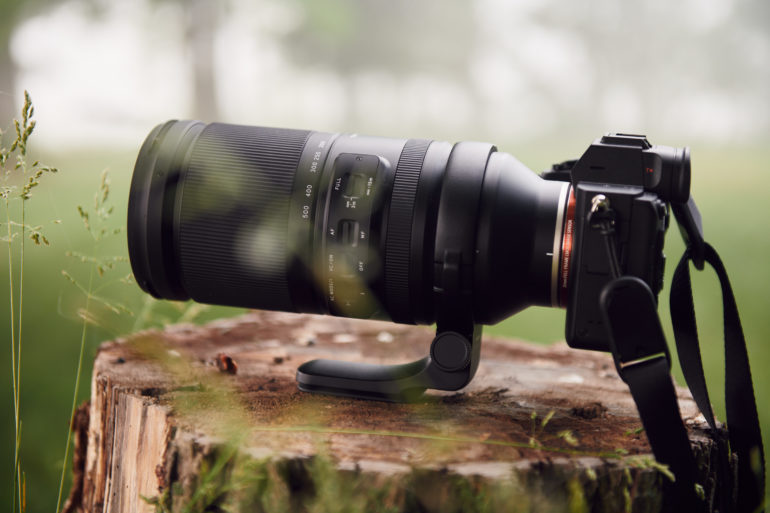
While this lens is far from perfect, it does continue to check off the right boxes for photographers who need the reach. In our initial review of the Tamron 150-500mm f5.3-6.7 Di III XC VXD, we said that,
…the corners are soft and, while the center is sharp, at 500mm, you’ll be using higher ISOs…. And I found the autofocus to be good but not great. (But again, this was partially from the camera body, not the lens itself.)
After putting its paces with a Sony a9 III versus the Sony a7R IV, we can confirm that having the added processing power for autofocusing makes a world of difference. The Tamron 150-500 XC VXD continues to impress for wildlife and birding, which remains impressive for a five-year-old lens. Tamron appears to continue improving the lens’s design by keeping it compatible with newer and improved autofocusing technologies. This will ensure that even if you were to purchase this lens for use with today’s and possibly even tomorrow’s camera bodies, you can expect to use it without fear of it being unable to keep up with the camera it is attached to.
For fans of birding, wildlife photography, or if you’re interested in shooting sports photography, the Tamron 150-500mm f5.3-6.7 Di III XC VXD remains one of the best bang-for-your-buck super-telephoto zoom lenses, and one that’s a lot easier to carry in a freezing marsh than Sony’s FE 200-600mm (which we also took out on this trip paired to the Sony a7V). I will say that while softness in the corners continues to be one of the drawbacks of this lens, it’s hard to find much fault in a super-telephoto lens with a 500mm focal length at roughly $ 1,200 new.